How Social Media Contributes to Formal and Informal Learning in Medical Education
Colloquially, social media is an important part of the lives of learners today – both personally and professionally. Defined as “forms of electronic communication through which users create online communities to share information, content, and messages,” social media consists of various platforms, including but not limited to Instagram, YouTube, LinkedIn, X (formerly Twitter), and Facebook. Both formal and informal educational content and activities are shared via these various platforms.
Formal Educational Content
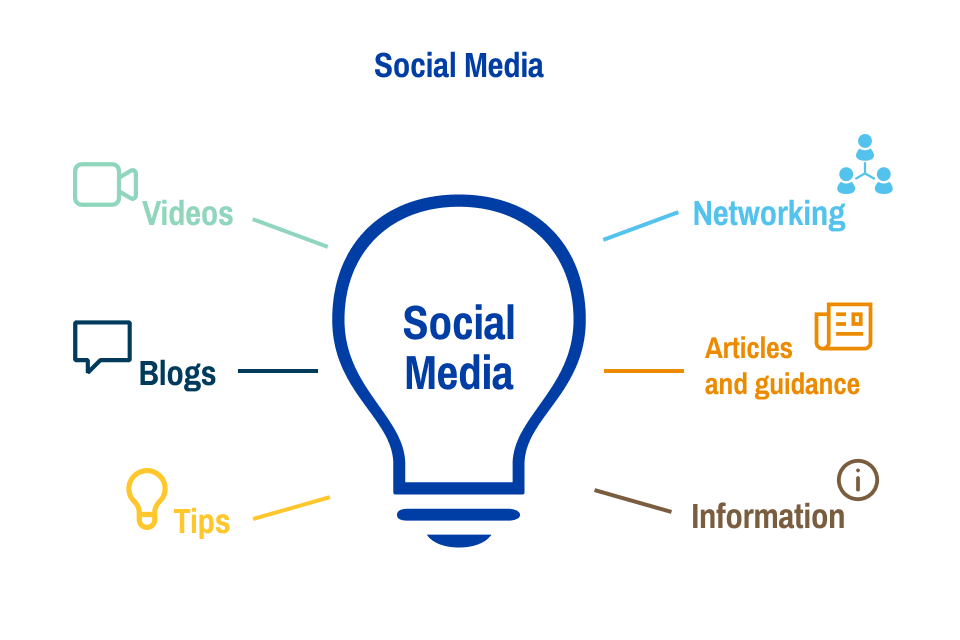
Ask any current medical student if they are aware of any educational social media accounts, and chances are they will be able to name a few. YouTube channels such as Hyguru, Rhesus Medicine, and Dirty Medicine are among those that create formal lecture-based content targeted towards medical students and other health professions learners to use at their own discretion. Often, these channels focus on licensing exam preparation or offer clinical insights. Many of these channels also exist across platforms, offering a variety of different formats and locations for learners to obtain information. Companies offering paid medical education services also engage in social media by offering snapshots of their products through free videos to introduce learners to their content.
Research articles are also now disseminated via social media for broader reach both within and outside the medical community. Many journals, including the New England Journal of Medicine (NEJM), The Lancet, and Nature, post excerpts, highlights, and even visual abstracts from recent research articles. This provides up-to-date research information in bite-sized, easy-to-consume pieces and provides an easy gateway for learners to access research. Interestingly, the NEJM has partnered with ophthalmologist Dr. Glaucomflecken to summarize important research through short one to two-minute videos. These short-form informational videos indicate a shift in how learners consume educational content and may be a contemporary way to build lifelong learning habits.
Use of Social Media in Curriculum
Within formal medical education curricula, social media can be leveraged to enhance educational opportunities and improve learner engagement. Evidence is currently limited within the literature due to a paucity of studies. One study designed a curriculum that utilized “push technology” to deliver high-yield information through X and Facebook. They found that most learners found the information useful and a platform to utilize for future learning.
Another study compared traditional teaching methods to supplementation with social media and found that the social media group’s exam outcomes were improved compared to the traditional group. Notably, classroom attendance was significantly reduced after social media integration. In graduate medical education, a program utilized an X page and found that residents increasingly utilized X for medical education over a period of time.
Informal Educational Content
Social media can provide informal educational content that can enhance learners’ experiences within medicine. For example, many organizations and individuals have their own social media accounts. This allows for greater connectedness, regardless of distance and other limitations. Specifically, platforms such as LinkedIn offer a design specifically for professional networking. The use of hashtags has also created ‘communities’ on social media platforms. These communities allow for discussion and the sharing of ideas across institutions.
Casual Informal Educational Content
There are also casual, informal forms of content on social media, including but not limited to skits and vlogs (video blogs). Skits often utilize comedy, stereotypes, and sometimes patient stories to highlight different aspects of medicine – including but not limited to education, hospital life, and patient experiences. Examples of such creators include former Saint Louis University Gastroenterology Fellow Doc Schmidt. These are often distributed in short-form through platforms such as Instagram Reels, YouTube Shorts, or on TikTok.
On the other hand, vlogs are typically longer-form content and often portray the “human side” of medicine. These creators include learners at all levels of training and portray the day-to-day life of medical trainees, often sharing “day-in-the-life” videos, study strategies, and residency application tips. Often, these creators have a presence on multiple platforms and develop content tailored to each platform’s unique content delivery style. For instance, creators may take clips from longer-form content on YouTube and adapt them to short-form content on platforms like TikTok and Instagram to drive viewers to watch more of their content on YouTube.
These types of informal educational content have value in the information portrayed that can give learners a better idea of different specialties and a variety of perspectives, including learners from different socio-economic backgrounds, as well as different generations of physicians. Many of these creators also share personal information, such as study tips, financial information, and skills that they have developed during training with respect to resilience and burnout. This type of social media offers information that can be difficult to otherwise obtain, particularly for those who are thinking about a career in medicine or are under-resourced.
Considerations
In utilizing social media, there are considerations for institutions and educators. Institutional policies often dictate engagement with social media, and healthcare professionals intending to engage with such platforms must take care to follow these policies. There is additional concern for the thinning of the personal-professional barrier, particularly when individuals use personal social media accounts to engage in professional social media activities.
Misinformation must be considered. Educational content shared via social media may not always be accurate and may not contain references to verify claims. This can make it difficult for inexperienced users to differentiate between factual and incorrect information. As such, it might benefit educators to ensure they are engaging with content from channels or creators they have vetted to ensure that if learners are engaging with such content, it is high-quality and accurate.
Given that many learners today spend time on social media platforms daily, institutions, educators, and trainees must work to understand these platforms to capitalize on a large audience. Through formal and informal educational content on social media, organizations and individuals can drive meaningful conversation and education without the limitations of time and space that traditionally exist. Social media can also be a powerful space for advocacy and collaboration within and between fields, and provide a catalyst for change or new ideas within medical education.

Kirti Veeramachaneni is a fourth-year medical student (Class of 2026) at Saint Louis University School of Medicine. Kirti’s areas of professional interest include assessment of clinical learners, medical humanities, and the intersection of technology and mental health. Kirti can be found on LinkedIn or contacted via email.